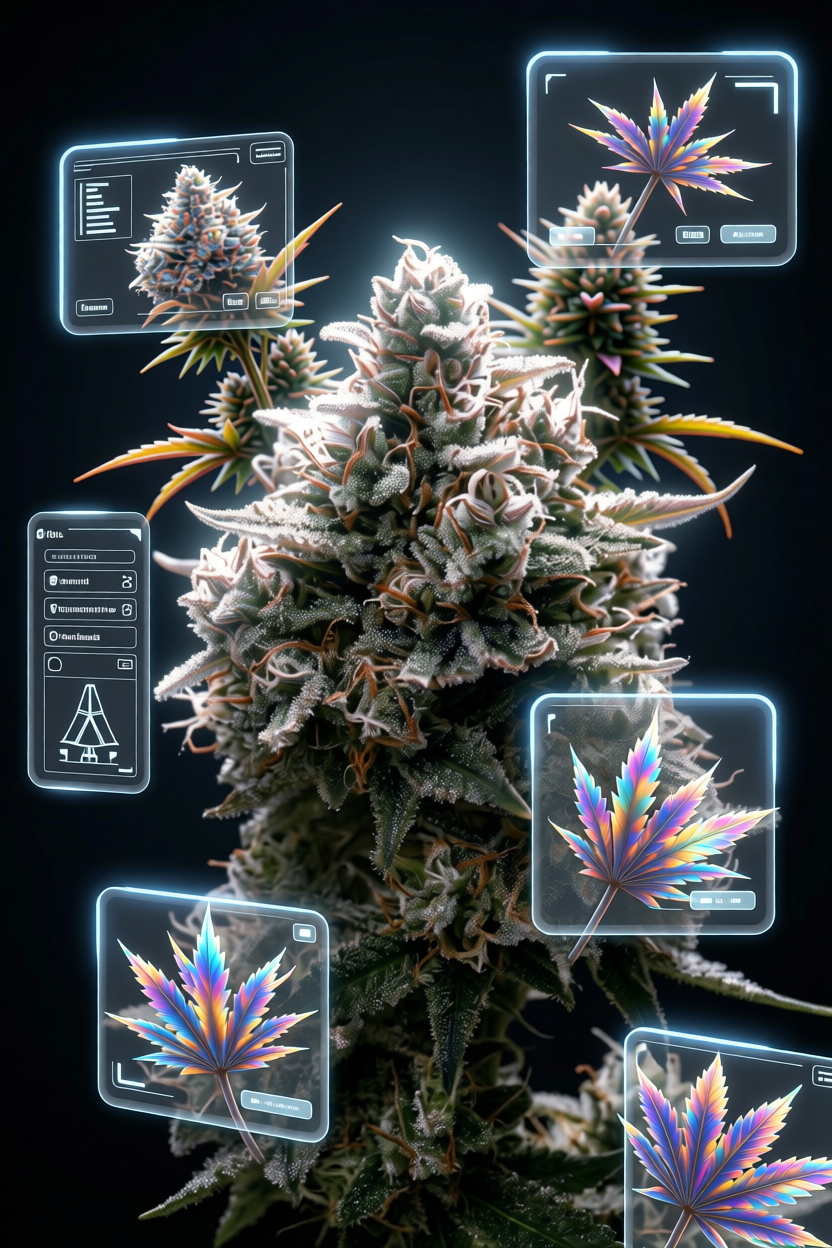
THC: Tetrahydrocannabinol – The Primary Psychoactive Compound of Cannabis
Tetrahydrocannabinol, more commonly known as THC, stands as the most recognized and extensively studied cannabinoid found in the Cannabis sativa plant. As the primary psychoactive compound responsible for the characteristic “high” associated with weed or marijuana consumption, THC has captivated scientific interest for decades. This article delves into the intricate chemistry, pharmacology, and physiological effects of this remarkable compound, offering an expert-level understanding of its role within the human body and the broader context of cannabis science.
The Chemistry of Tetrahydrocannabinol
Understanding THC begins with its molecular structure and how it is synthesized within the cannabis plant. Its unique chemical properties dictate its interaction with biological systems.
Molecular Structure and Classification
THC is classified as a phytocannabinoid, meaning it is a cannabinoid produced by plants. Its chemical formula is C₂₁H₃₀O₂, and it possesses a distinctive tricyclic structure comprising a benzene ring, a dihydropyran ring, and a cyclohexene ring. This complex arrangement, particularly the double bond within the cyclohexene ring, is crucial for its biological activity. THC is highly lipophilic, meaning it readily dissolves in fats and oils, a property that significantly influences its absorption, distribution, and metabolism within the human body.
Biosynthesis in the Cannabis Plant
Within the cannabis plant, THC does not initially exist in its active form. Instead, it is synthesized as a carboxylic acid precursor known as Tetrahydrocannabinolic Acid (THCA). The biosynthesis pathway begins with cannabigerolic acid (CBGA), often referred to as the “mother cannabinoid.” Through the action of an enzyme called THCA synthase, CBGA is converted into THCA.
THCA itself is non-psychoactive. For it to become the active psychoactive compound, THC, a process called decarboxylation must occur. This typically happens when cannabis is exposed to heat, such as through smoking, vaping, or cooking. Heat removes a carboxyl group (COOH) from the THCA molecule, transforming it into the neutral, active THC. This chemical transformation is fundamental to experiencing the effects of marijuana.
Pharmacological Mechanisms: THC and the Endocannabinoid System
The profound effects of THC on the human body are mediated through its interaction with a complex internal regulatory system known as the endocannabinoid system (ECS).
The Endocannabinoid System (ECS)
The ECS is a ubiquitous cell-signaling system found in all vertebrates, playing a crucial role in maintaining homeostasis across various physiological processes. It comprises three main components:
- Endocannabinoids: Naturally produced lipid-based neurotransmitters (e.g., anandamide and 2-arachidonoylglycerol, or 2-AG).
- Cannabinoid Receptors: Proteins on the surface of cells that bind to endocannabinoids and phytocannabinoids. The two main types are CB1 and CB2 receptors.
- Enzymes: Responsible for synthesizing and breaking down endocannabinoids.
The ECS is involved in regulating mood, appetite, pain sensation, memory, sleep, immune function, and more.
THC’s Interaction with Cannabinoid Receptors
THC exerts its psychoactive effects primarily by acting as a partial agonist at CB1 receptors. These receptors are densely concentrated in the brain and central nervous system, particularly in areas associated with cognition (cerebral cortex), memory (hippocampus), pleasure and reward (basal ganglia), and motor coordination (cerebellum). When THC binds to CB1 receptors, it mimics the action of the body’s natural endocannabinoids, leading to a cascade of intracellular changes that alter neurotransmitter release and neuronal activity.
While CB1 receptor activation is responsible for the majority of THC’s psychoactive effects, THC also interacts with CB2 receptors, which are predominantly found on immune cells and in peripheral tissues. Activation of CB2 receptors is thought to modulate immune responses and inflammation, contributing to some of the potential therapeutic effects of cannabis without contributing significantly to its psychoactivity.
The Spectrum of Effects: Understanding THC’s Impact
The effects of THC are multifaceted and can vary significantly based on dose, individual physiology, and the method of consumption.
Acute Psychoactive Effects
The most well-known effects of THC are its acute psychoactive properties. These typically include:
- Euphoria and Relaxation: A sense of well-being, contentment, and reduced stress.
- Altered Perception: Changes in the perception of time, colors, sounds, and other sensory inputs.
- Enhanced Sensory Experience: Music, food, and tactile sensations may be perceived as more intense or enjoyable.
- Altered Thought Processes: Creativity, introspection, or sometimes disorganized thinking.
- Impaired Cognition: Short-term memory impairment, difficulty concentrating, and reduced motor coordination.
While many users seek these effects, higher doses or individual sensitivities can lead to less desirable outcomes such as anxiety, paranoia, panic attacks, or even transient psychotic-like experiences.
Physiological Effects
Beyond its psychoactive impact, THC also induces several physiological changes:
- Cardiovascular: Increased heart rate (tachycardia) and vasodilation, which can lead to reddening of the eyes.
- Ocular: Decreased intraocular pressure.
- Oral: Dry mouth (xerostomia).
- Appetite Stimulation: Commonly known as “the munchies,” THC can significantly increase appetite.
- Analgesia: Pain relief.
- Anti-emetic: Reduction of nausea and vomiting.
Factors Influencing Effects
The overall experience with THC is not solely determined by the amount of the compound consumed. Several factors play a critical role:
- Dose: Higher doses generally lead to more intense effects.
- Route of Administration: Inhalation (smoking, vaping) leads to rapid onset (minutes) and shorter duration (2-4 hours), as THC quickly enters the bloodstream via the lungs. Oral ingestion (edibles) results in a slower onset (30-90 minutes) but a longer-lasting and often more intense effect, due to hepatic metabolism converting THC into the more potent 11-hydroxy-THC.
- Individual Tolerance: Regular users develop tolerance, requiring higher doses for the same effect.
- Genetics: Individual genetic variations can influence how one metabolizes THC and responds to its effects.
- Set and Setting: The user’s mood, expectations, and environment can significantly shape the subjective experience.
- Cannabis Strain: While THC is the primary driver of psychoactivity, the presence of other cannabinoids (like CBD) and terpenes in different cannabis strains can modulate the overall effect, contributing to the perceived differences between “sativa” and “indica” experiences.
Metabolism and Elimination of THC
Once THC enters the body, it undergoes a complex metabolic process before being eliminated.
Hepatic Metabolism
THC is primarily metabolized in the liver by cytochrome P450 enzymes, particularly CYP2C9, CYP2C19, and CYP3A4. The main metabolic pathway involves hydroxylation, producing several metabolites. The most significant active metabolite is 11-hydroxy-THC (11-OH-THC), which is itself psychoactive and, in some cases, more potent than THC, especially when cannabis is consumed orally.
11-OH-THC is then further metabolized into 11-nor-9-carboxy-THC (THC-COOH), which is an inactive metabolite. THC-COOH is highly water-soluble and is the compound typically detected in drug tests (urine, hair, blood) as an indicator of cannabis use.
Excretion
Due to its lipophilic nature, THC and its metabolites are stored in fat tissues throughout the body. This characteristic contributes to its relatively long elimination half-life, which can range from several days in infrequent users to several weeks or even months in chronic, heavy users. Excretion occurs primarily through feces (around 65%) and urine (around 20%).
Related Concepts and Nuances in Cannabis Science
The study of THC is intertwined with a broader understanding of the cannabis plant and its diverse chemical profile.
The Entourage Effect
While THC is the primary psychoactive compound, it does not act in isolation within the cannabis plant. The “entourage effect” is a hypothesis suggesting that other compounds present in cannabis, such as other cannabinoids (e.g., cannabidiol or CBD), terpenes (aromatic molecules), and flavonoids, can modulate or enhance the effects of THC. For instance, CBD is known to mitigate some of the less desirable effects of THC, such as anxiety and paranoia, by interacting with cannabinoid receptors and other neurotransmitter systems. This synergistic interaction highlights the complexity of whole-plant cannabis versus isolated THC.
Synthetic Cannabinoids vs. Phytocannabinoids
It is crucial to differentiate naturally occurring THC (a phytocannabinoid) from synthetic cannabinoids. Synthetic cannabinoids, often sold as “Spice” or “K2,” are laboratory-produced chemicals designed to mimic THC’s effects. However, they are often full agonists at CB1 receptors, meaning they bind more strongly and activate the receptors more intensely than natural THC. This can lead to unpredictable, severe, and potentially life-threatening adverse effects, including seizures, acute kidney injury, psychosis, and cardiovascular problems. Their chemical structures are often vastly different from tetrahydrocannabinol, and their safety profiles are significantly worse.
THC Isomers and Analogs
Recent years have seen increased interest in various isomers and analogs of tetrahydrocannabinol. Delta-9 THC is the most common and potent form discussed here. However, other naturally occurring or semi-synthetic isomers like Delta-8 THC and Delta-10 THC have gained attention. These isomers possess slightly different chemical structures, leading to variations in their potency and effects. For example, Delta-8 THC is generally considered less potent than Delta-9 THC, offering a milder psychoactive experience. Additionally, cannabinoids like Tetrahydrocannabivarin (THCV) share structural similarities but have distinct pharmacological profiles, often acting as antagonists or inverse agonists at CB1 receptors at lower doses.
Conclusion
THC, or tetrahydrocannabinol, stands as the quintessential primary psychoactive compound of the cannabis plant. Its intricate chemistry, from its biosynthesis as THCA to its decarboxylation into the active form, underpins its profound effects. Through its interaction with the body’s endocannabinoid system, particularly the CB1 receptors in the brain, THC elicits a wide spectrum of psychoactive and physiological responses.
The journey of THC through metabolism and elimination further illustrates its complex pharmacology, influencing its duration of action and detectability. As research continues to unravel the nuances of cannabis and its many compounds, a deeper understanding of THC’s role, both in isolation and in concert with other phytocannabinoids and terpenes, remains a cornerstone of cannabinoid science. This knowledge is not only vital for medical applications but also for informing public health policies and promoting responsible use of marijuana.