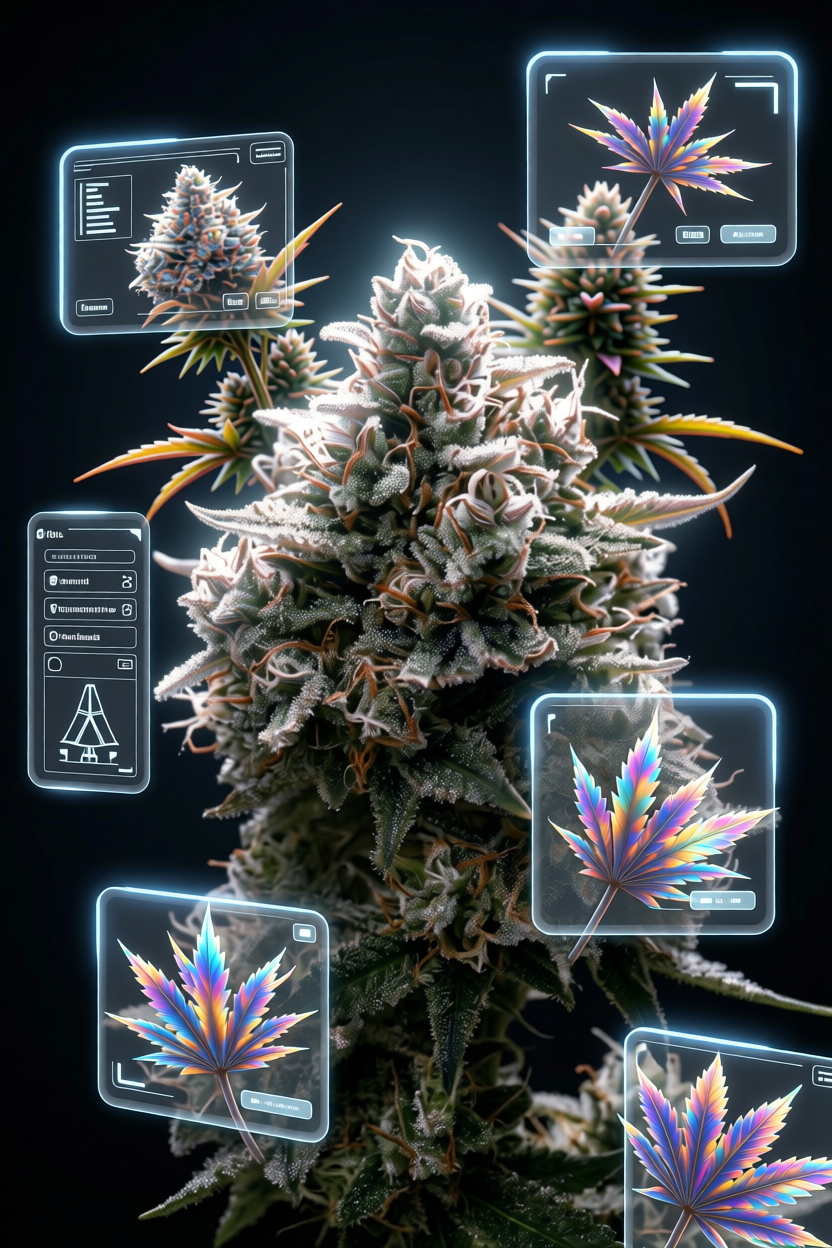
The S1 Generation: Unlocking Genetic Potential Through Self-Pollination
In the intricate world of plant breeding and genetics, understanding the various generations and their implications is paramount for successful trait development and stabilization. Among these, the S1 generation holds a particularly significant position. Far from being a mere numerical designation, the S1 represents a critical step in a breeder’s journey, offering profound insights into a plant’s genetic makeup and paving the way for the isolation and fixation of desirable characteristics.
This article will delve into the concept of the S1 generation, explaining its creation, purpose, and the genetic principles that underpin its importance, particularly in the context of advanced plant breeding, including specialized crops like cannabis.
Understanding the Fundamentals: Plant Reproduction and Self-Pollination
Before we define S1, it’s essential to grasp the basics of plant reproduction. Plants, like all living organisms, reproduce to create offspring. This can occur sexually (involving the fusion of gametes from two parents or from one parent) or asexually (cloning). Our focus here is on sexual reproduction, specifically a process known as self-pollination.
Self-pollination, or autogamy, occurs when pollen from a flower fertilizes ovules within the same flower or another flower on the same plant. Many plant species are naturally capable of self-pollination, possessing both male and female reproductive organs (hermaphroditism) or having separate male and female flowers on the same individual (monoecy). In breeding, self-pollination can also be intentionally induced, even in species that typically outcross, to achieve specific genetic objectives.
Defining S1: The First Selfed Generation
The term S1 stands for “Selfed Generation 1.” It refers specifically to the first generation of a plant bred with itself (selfed).
To create an S1 generation, a breeder selects a single parent plant – often referred to as the P0 (parental generation) or sometimes an F1 (first filial generation from a cross) – and induces or allows it to self-pollinate. The seeds produced from this self-pollination event are then designated as the S1 generation.
Crucially, the S1 generation is distinct from an F1 generation. An F1 results from a cross between two different parent plants. An S1, by definition, comes from a single parent breeding with itself. This distinction is fundamental to understanding the genetic implications of each generation.
Why Create an S1 Generation? Objectives and Applications
The decision to create an S1 generation is driven by several key objectives in plant breeding, all centered around understanding and manipulating a plant’s genetics.
1. Increasing Homozygosity and Revealing Recessive Traits
One of the primary reasons for selfing a plant is to increase the level of homozygosity within its offspring. When a plant is selfed, the genetic material from that single parent is essentially recombined. Any heterozygous loci (where a plant has two different alleles for a particular gene) in the parent have a 50% chance of producing homozygous offspring (either two dominant or two recessive alleles) in the S1 generation.
This process is invaluable for revealing recessive traits. Many desirable or undesirable traits are controlled by recessive genes, which remain hidden when a plant is heterozygous (carrying one dominant and one recessive allele). By selfing, these recessive alleles have a chance to pair up, expressing the trait in a portion of the S1 population. This allows breeders to identify and select for (or against) these previously masked characteristics.
2. Stabilization and Uniformity
For breeders aiming to create stable, uniform lines, the S1 generation is a critical first step. While the S1 population itself will still exhibit considerable genetic variation if the parent was highly heterozygous, it represents a move towards greater consistency compared to the parent’s potential offspring from an outcross.
By identifying and selecting individuals within the S1 population that display the desired traits with greater consistency, breeders can begin the process of “fixing” those traits. Subsequent generations of selfing (S2, S3, etc.) will further increase homozygosity and lead to even greater uniformity.
3. Breeding for Specific Traits
Whether it’s disease resistance, a particular flavor profile, a unique growth habit, or specific cannabinoid and terpene ratios in cannabis, the S1 generation allows breeders to isolate and concentrate these traits. If a breeder has an exceptional individual plant (P0) that exhibits a suite of highly desirable characteristics but is known to be heterozygous, selfing it to create an S1 population provides a diverse pool of offspring. From this pool, individuals that express the desired traits more purely or intensely can be selected for further breeding.
4. Creating Inbred Lines
The S1 generation is the foundational step in developing inbred lines (IBLs). An inbred line is a genetically uniform and stable population created through repeated generations of self-pollination and rigorous selection. While the S1 is just the beginning, it sets the stage for the subsequent S2, S3, and further generations that ultimately lead to highly homozygous and predictable breeding stock. These inbred lines are invaluable for hybrid seed production and genetic research.
Genetic Implications of Selfing
While highly beneficial, the process of creating an S1 generation and subsequent selfed generations comes with important genetic considerations:
1. Genetic Variation within S1
Despite the increase in homozygosity, the S1 generation will still exhibit significant genetic variation if the parent plant was heterozygous for many genes. This variation is precisely what breeders exploit to select for desired traits. Each S1 seed represents a unique recombination of the parent’s alleles.
2. Inbreeding Depression
A significant challenge associated with repeated selfing is inbreeding depression. This phenomenon refers to the reduction in vigor, fertility, yield, and overall fitness that can occur when closely related individuals are bred together over successive generations. As homozygosity increases, deleterious recessive alleles, which might have been masked in heterozygous individuals, become expressed. Breeders must be vigilant in selecting against individuals showing signs of inbreeding depression within their S1 and subsequent selfed populations.
3. Selection Pressure
The S1 generation provides an excellent opportunity for intense selection pressure. Because of the increased expression of recessive traits and the segregation of alleles, breeders can identify and remove undesirable individuals early in the breeding process. This rigorous selection is crucial for guiding the genetic trajectory of the breeding line.
Practical Considerations for S1 Generation Creation
The practical execution of creating an S1 generation involves several steps:
1. Parent Selection
The initial parent plant (P0 or F1) must be carefully chosen. It should possess the desired traits the breeder wishes to stabilize or investigate. Its genetic background, known heterozygosity, and overall health are critical factors.
2. Inducing Self-Pollination
- Naturally Hermaphroditic Plants: For plants that naturally produce both male and female flowers or perfect flowers (containing both organs), self-pollination can occur spontaneously. Breeders may simply need to ensure isolation to prevent cross-pollination from other plants.
- Chemical Induction: In many dioecious plants (separate male and female individuals), such as most cannabis varieties, chemical treatments are used to induce a female plant to produce male flowers. Common agents include colloidal silver (CS) or silver thiosulfate (STS). These treatments temporarily alter hormone balances, causing female plants to develop pollen-producing male structures. The pollen from these induced male flowers is genetically identical to the female plant, allowing it to self-pollinate.
- Physical Isolation: Regardless of the method, the parent plant must be isolated from other pollen sources to ensure that any seeds produced are indeed the result of self-pollination.
3. Seed Collection and Storage
Once self-pollination has occurred and seeds have matured, they are carefully collected, dried, and stored under appropriate conditions to maintain viability. These seeds represent the precious S1 generation, ready for germination and evaluation.
Beyond S1: Subsequent Selfed Generations
The S1 generation is often just the beginning. To achieve greater genetic stability and uniformity, breeders will typically continue the process of self-pollination, creating S2, S3, S4, and subsequent generations. Each successive generation of selfing further increases homozygosity, gradually reducing genetic variation until a highly stable and predictable inbred line is established. This iterative process, combined with stringent selection, is how breeders “fix” desired traits into a stable genetic package.
S1 in the Context of Cannabis Breeding
In the realm of cannabis breeding, the S1 generation plays a particularly vital role. Given the plant’s complex genetics and the desire for specific cannabinoid and terpene profiles, as well as consistent growth characteristics, S1s are frequently utilized:
- Stabilizing Chemotypes: A breeder might have an exceptional female cannabis plant with a unique cannabinoid profile (e.g., high CBD, specific THC:CBD ratio, rare minor cannabinoids). By inducing this plant to self-pollinate, the S1 generation will reveal the genetic potential and variation for these traits. Individuals with the most stable and desirable chemotypes can then be selected.
- Creating “Feminized” Seeds: When a female cannabis plant is induced to self-pollinate, all the resulting S1 seeds will carry only female chromosomes (XX). This means that, under normal growing conditions, these S1 seeds will produce only female plants, which is highly desirable for growers interested in flower production without the risk of male plants pollinating the crop.
- Isolating Desirable Morphology: Beyond chemical profiles, S1s help breeders stabilize growth patterns, leaf structure, disease resistance, and overall plant vigor.
Conclusion: The Enduring Value of the S1 Generation
The S1 generation stands as a cornerstone in the edifice of modern plant breeding. By allowing a single plant to breed with itself, breeders gain an unparalleled window into its genetic architecture. This first selfed generation is instrumental in increasing homozygosity, revealing hidden recessive traits, and initiating the journey towards stable, uniform, and predictable plant lines.
Whether for agricultural crops, ornamental plants, or specialized varieties like cannabis, the strategic creation and careful evaluation of the S1 generation are indispensable steps for any experienced subject-matter expert dedicated to understanding, improving, and manipulating plant genetics for future generations. It is a testament to the power of controlled reproduction in unlocking the full potential of the plant kingdom.