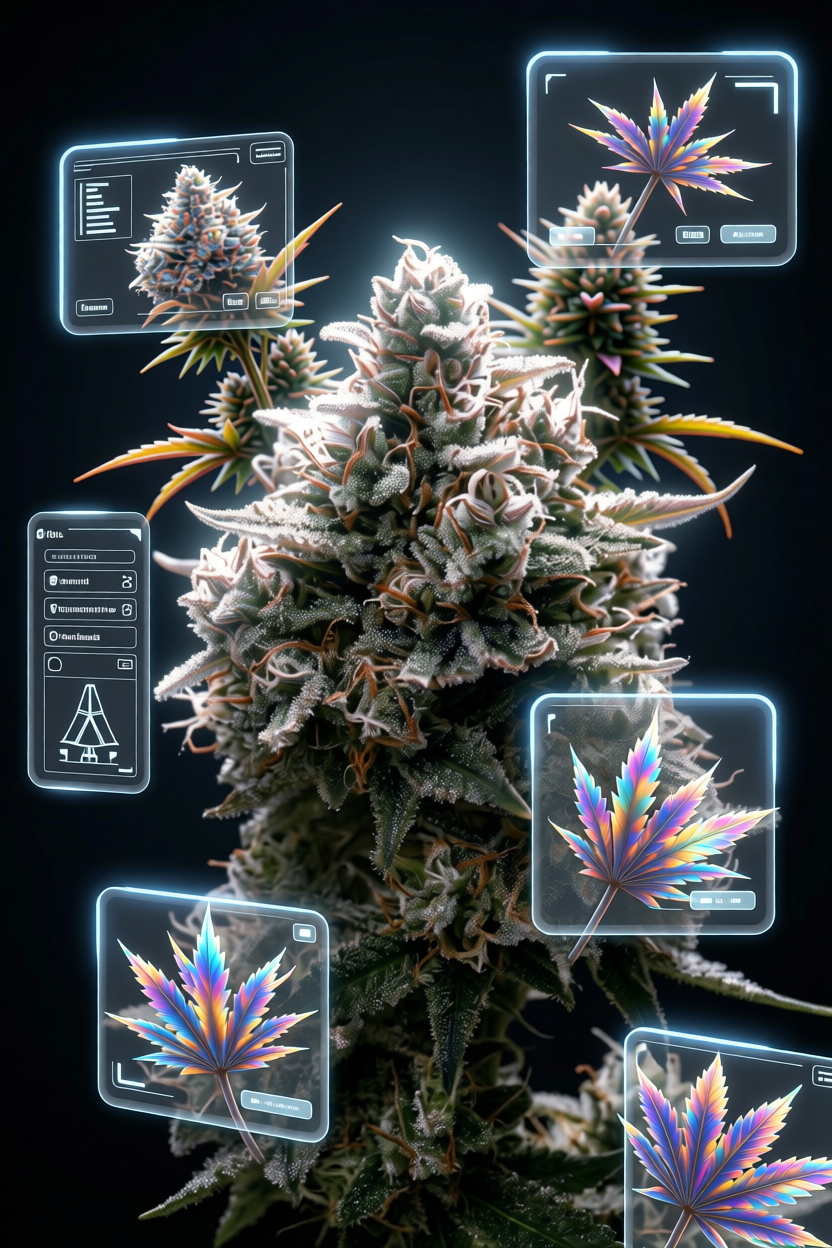
The Lateral Branch: A Fundamental Element of Plant Architecture and Physiology
In the intricate world of botany, understanding the fundamental structures that dictate plant form and function is paramount. Among these, the lateral branch stands out as a critical component, defined simply as a side branch growing from the main stem. While seemingly straightforward, the development, physiology, and ecological significance of lateral branches are complex, influencing everything from a plant’s ability to photosynthesize efficiently to its reproductive success and overall survival. This article delves into the multifaceted nature of lateral branches, exploring their botanical origins, physiological roles, and practical implications across diverse plant species, including their specific relevance in the cultivation of plants like cannabis.
Understanding the Anatomy of a Lateral Branch
To fully appreciate the role of a lateral branch, one must first grasp its anatomical basis and how it integrates with the plant’s primary structure.
Definition and Origin
A lateral branch originates from an axillary bud, which is a dormant embryonic shoot located in the axil of a leaf – the angle formed between a leaf petiole and the main stem. These buds are essentially miniature, undeveloped shoots, containing meristematic tissue capable of cell division and differentiation. When activated, typically by hormonal signals or environmental cues, the axillary bud elongates and develops into a new stem, complete with its own nodes, internodes, and leaves, thus forming a side branch growing from the main stem. This process allows the plant to expand its canopy and explore new spatial dimensions.
Key Components
Once developed, a lateral branch mirrors the structure of the main stem, albeit often on a smaller scale. It possesses:
- Nodes: Points along the branch where leaves and other structures (like secondary lateral branches or flowers) emerge.
- Internodes: The segments of the branch between two successive nodes.
- Leaves: The primary photosynthetic organs, crucial for energy production.
- Apical Bud: The terminal bud at the tip of the lateral branch, responsible for its primary elongation. This bud can also exert its own level of apical dominance over subsequent lateral branches forming on it.
Relationship to the Main Stem
The connection between a lateral branch and the main stem is robust, involving a continuous network of vascular tissues. Xylem and phloem, responsible for water, nutrient, and sugar transport, extend from the main stem into the developing lateral branch, ensuring its sustained growth and physiological activity. This integrated vascular system is vital for the efficient distribution of resources throughout the entire plant structure.
The Physiological Significance of Lateral Branches
The presence and development of lateral branches are not merely incidental; they are fundamental to a plant’s survival and reproductive strategy.
Photosynthesis and Energy Production
One of the most critical roles of lateral branches is to increase the plant’s photosynthetic capacity. By extending outwards, these branches present a greater surface area of leaves to sunlight, maximizing light interception and, consequently, the production of sugars through photosynthesis. This increased energy production fuels further growth, development, and reproductive efforts. A plant with a robust network of lateral branches can capture significantly more light than a single, unbranched stem.
Nutrient and Water Transport
Lateral branches serve as conduits for the efficient distribution of water and dissolved nutrients absorbed by the roots, as well as sugars produced in the leaves. They ensure that all parts of the plant, including developing flowers and fruits, receive the necessary resources for optimal function. The extensive branching network facilitates a more widespread and equitable distribution of these vital elements.
Reproductive Structures
In many plant species, including numerous agricultural crops and ornamental plants, flowers, fruits, and seeds are predominantly borne on lateral branches. This strategic placement can enhance pollination success by presenting reproductive organs more prominently or by providing structural support for developing fruits. For example, in cannabis plants, the majority of the cannabinoid-rich flowers (buds) develop along the lateral branches.
Structural Support and Stability
The collective architecture formed by the main stem and its lateral branches provides structural integrity and stability to the plant. This branching pattern helps to distribute weight, resist wind stress, and maintain an upright posture, which is crucial for light capture and dispersal of reproductive propagules.
Factors Influencing Lateral Branch Development
The growth of a lateral branch is not a random event but is meticulously regulated by a combination of internal (hormonal) and external (environmental) factors.
Hormonal Regulation (Apical Dominance)
One of the most significant internal regulators is apical dominance, a phenomenon where the apical bud (the primary growing tip of the main stem) inhibits the growth of axillary buds below it. This inhibition is primarily mediated by auxins, plant hormones produced in the apical meristem and transported downwards. High concentrations of auxin suppress lateral bud development, ensuring that the plant prioritizes vertical growth. Conversely, cytokinins, another class of plant hormones produced in the roots, promote cell division and lateral bud growth. The balance between auxins and cytokinins largely dictates the degree of branching. Removing the apical bud (e.g., through pruning or “topping”) reduces auxin production, thereby releasing lateral buds from inhibition and promoting the growth of side branches.
Environmental Factors
External conditions play a crucial role in modulating lateral branch development:
- Light Intensity: Plants growing in high light conditions often exhibit more branching, as increased light availability allows for the support of a larger photosynthetic canopy. Conversely, in low light, plants may prioritize vertical growth to reach light, suppressing lateral development.
- Nutrient Availability: Adequate nutrients, particularly nitrogen, are essential for robust growth, including the development of lateral branches. Nutrient-deficient plants may exhibit stunted branching.
- Water Stress: Severe water stress can inhibit overall growth, including lateral branching, as the plant conserves resources.
- Temperature: Optimal temperatures are necessary for metabolic processes that support branch development.
Genetic Predisposition
The inherent genetic makeup of a plant species dictates its typical branching pattern. Some species are naturally bushy with extensive lateral branching, while others tend to grow as single, unbranched stems. This genetic blueprint interacts with environmental and hormonal cues to determine the final plant architecture. For instance, some varieties of cannabis are naturally more branchy than others.
Pruning and Training Techniques
Human intervention, particularly in horticulture and agriculture, can profoundly influence lateral branch development. Techniques like pruning, topping, and low-stress training (LST) are employed to manipulate plant architecture. By removing the apical bud, growers can break apical dominance, encouraging the growth of multiple lateral branches, which can lead to increased yields in crops like tomatoes, fruit trees, and cannabis. This strategic manipulation is a cornerstone of efficient plant management.
Diverse Manifestations of Lateral Branches Across Plant Species
The concept of a lateral branch is universal in vascular plants, yet its expression varies widely, reflecting diverse evolutionary strategies.
Herbaceous Plants
In many herbaceous plants, including annuals and perennials, lateral branches contribute to a bushy growth habit. For example, many common garden plants and even some “weeds” (unwanted plants) develop extensive lateral branching to maximize seed production and competitive advantage. In the context of cannabis, a herbaceous plant, robust lateral branching is highly desirable for maximizing flower production.
Woody Plants
Trees and shrubs, being woody perennials, exhibit complex and long-lived branching patterns. The main trunk gives rise to primary lateral branches, which in turn produce secondary and tertiary branches. This hierarchical branching creates the characteristic canopy shapes of different tree species, providing structural strength and maximizing light capture over many growing seasons. The structural integrity of these woody lateral branches is critical for the tree’s longevity.
Specialized Lateral Structures
Beyond typical leafy branches, some specialized plant structures are, in essence, modified lateral branches or originate from lateral buds:
- Thorns: Modified stems that provide defense against herbivores.
- Tendrils: Coiling structures that help climbing plants attach to supports.
- Stolons (Runners): Horizontal stems that grow along the soil surface, producing new plantlets at their nodes (e.g., strawberries).
- Rhizomes: Horizontal underground stems that can produce new shoots and roots (e.g., ginger, some grasses).
These diverse forms underscore the versatility of the lateral branch as a fundamental developmental module.
Practical Implications and Management of Lateral Branches
Understanding and managing lateral branches is crucial for optimizing plant growth, health, and yield in various contexts.
Agricultural and Horticultural Contexts
In agriculture, manipulating lateral branching is a common practice to enhance productivity. For fruit trees, controlled pruning encourages the development of strong, fruit-bearing lateral branches. In vegetable crops, managing lateral shoots (suckers) can direct energy towards fruit development or increase overall yield, depending on the species and desired outcome. The goal is often to balance vegetative growth with reproductive output.
Specifics in Cannabis Cultivation
For cannabis (and marijuana) cultivators, the management of lateral branches is a critical aspect of maximizing yield and quality. Techniques such as “topping” (removing the apical meristem) are employed to break apical dominance, promoting the growth of multiple robust lateral branches. This creates a more even canopy, allowing for better light penetration to lower bud sites and improving air circulation, which helps prevent mold and mildew. Low-stress training (LST) involves gently bending and tying down lateral branches to encourage horizontal growth and expose more bud sites to light. The aim is to develop numerous, equally productive lateral branches, each bearing significant flower clusters, rather than relying on a single dominant main stem.
Pest and Disease Management
Proper spacing and management of lateral branches contribute to better airflow within the plant canopy. This improved ventilation reduces humidity levels around leaves and flowers, thereby decreasing the risk of fungal diseases and creating a less hospitable environment for certain pests. Strategic removal of some lateral branches or leaves can be part of an integrated pest and disease management strategy.
Conclusion
The lateral branch, a seemingly simple side branch growing from the main stem, is in fact a cornerstone of plant biology. From its precise botanical origin in the axillary bud to its profound physiological roles in photosynthesis, nutrient transport, and reproduction, the lateral branch is indispensable to plant life. Its development is a finely tuned process, governed by a complex interplay of hormones, genetics, and environmental cues. Whether observed in the sprawling canopy of a majestic tree, the dense foliage of a common weed, or the carefully cultivated architecture of a cannabis plant, the lateral branch exemplifies the elegance and efficiency of plant design, enabling plants to thrive, reproduce, and adapt to an ever-changing world. A thorough understanding of this fundamental structure is essential for anyone seeking to comprehend or interact with the botanical realm.