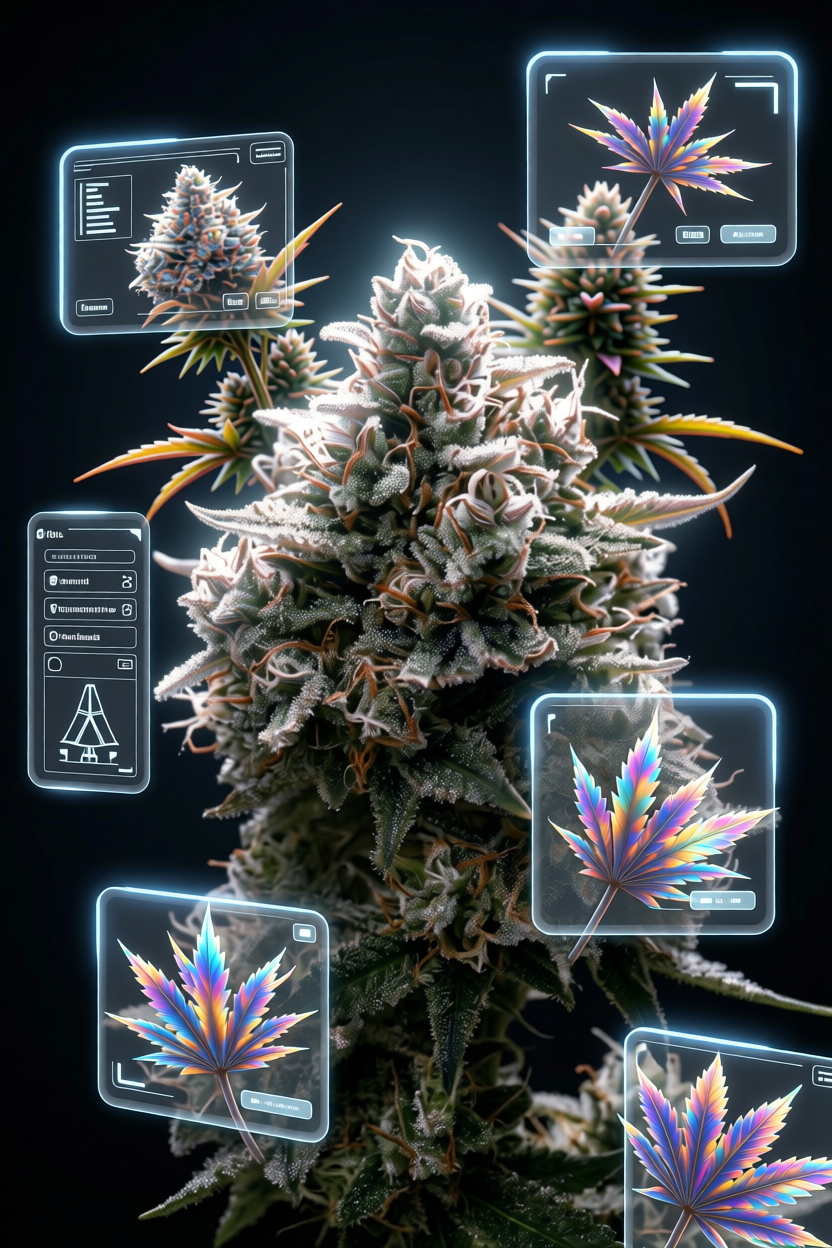
The Inbred Line (IBL): A Cornerstone of Genetic Stability and Predictability
In the intricate world of plant breeding and genetics, the concept of an Inbred Line (IBL) stands as a fundamental pillar, representing a pinnacle of genetic uniformity and predictability. An inbred line (IBL) is, at its core, a strain that has been bred with itself for multiple generations for stability. This deliberate and rigorous process of self-pollination leads to a highly homozygous genetic makeup, making the IBL an invaluable tool for both scientific research and the development of new, consistent plant varieties, particularly within the cannabis industry.
Understanding the development and characteristics of an IBL is crucial for anyone seeking to delve into advanced plant breeding, whether for agricultural crops, ornamental plants, or specialized varieties like weed or marijuana. This article will explore the definition, genetic principles, development process, advantages, challenges, and applications of IBLs, establishing a comprehensive understanding of this vital genetic resource.
What Exactly is an Inbred Line (IBL)?
An inbred line (IBL) is a population of organisms, typically plants, derived from repeated self-pollination (or self-fertilization) of a single parent individual over many successive generations. The defining characteristic of an IBL is its remarkable stability and genetic uniformity.
Imagine a single plant with desirable traits. To create an IBL, this plant is bred with itself. The resulting offspring are then also bred with themselves, and this process is meticulously repeated. Each successive generation of self-pollination progressively reduces heterozygosity (the presence of different alleles at a given gene locus) and increases homozygosity (the presence of identical alleles).
The ultimate goal of this intensive self-breeding is to achieve a state where nearly all gene loci are homozygous. This means that, for practical purposes, all individuals within that specific line are genetically identical, or very nearly so. This genetic consistency translates directly into phenotypic stability – meaning the observable traits of the plants (e.g., height, yield, disease resistance, cannabinoid profile in cannabis) are highly predictable and uniform across the strain.
The Genetics Behind IBLs: Achieving Homozygosity
The power of an IBL lies in its genetic architecture, specifically the high degree of homozygosity achieved through repeated selfing. To fully grasp this, a brief review of basic genetics is helpful.
Every organism inherits two copies of each gene, one from each parent. These copies are called alleles. If both alleles for a particular gene are identical, the organism is homozygous for that gene. If they are different, it’s heterozygous.
When a plant is self-pollinated, its offspring receive two copies of each gene from the same parent. Consider a heterozygous gene pair (Aa). When this plant self-pollinates, the offspring will be:
- 25% AA (homozygous)
- 50% Aa (heterozygous)
- 25% aa (homozygous)
In the next generation, if only the heterozygous (Aa) individuals are self-pollinated, the proportion of heterozygosity continues to decrease. With each successive generation of self-pollination, the percentage of heterozygous loci is halved. This means that after approximately 6-8 generations of continuous selfing, a line is considered to be largely true-breeding, meaning it exhibits a very high level of homozygosity (typically over 95%).
This process leads to:
- Allele Fixation: Specific alleles become “fixed” at particular gene loci. If an allele is present, it will almost certainly be homozygous (e.g., AA or aa).
- Genetic Uniformity: All individuals within the inbred line share an almost identical genetic blueprint. This is why an IBL is often described as a genetically stable strain.
The Process of Developing an IBL
Developing an inbred line is a meticulous and time-consuming endeavor that has been refined over centuries of plant breeding. It typically involves several key stages:
- Selection of Initial Parent Stock: The process begins with identifying a single, superior individual plant that possesses a desirable combination of traits. This could be a high-yielding variety, a disease-resistant specimen, or in the context of cannabis, a plant with an exceptional cannabinoid or terpene profile.
- First Generation Self-Pollination (S0 to S1): The selected parent plant (S0) is self-pollinated. In plants that are naturally hermaphroditic, this can occur spontaneously or be facilitated. For dioecious plants like cannabis (where male and female flowers are on separate plants), techniques like inducing male flowers on a female plant (e.g., using colloidal silver or gibberellic acid) are employed to allow it to be bred with itself. The seeds produced are the S1 generation.
- Evaluation and Selection (S1 and Beyond): The S1 generation is grown out, and individual plants are rigorously evaluated for the desired traits. While there will still be significant variation in the S1 generation due to remaining heterozygosity, superior individuals are selected.
- Repeated Self-Pollination and Selection (S2, S3, S4…): The selected S1 individuals are then self-pollinated to produce the S2 generation. This cycle of growing, evaluating, selecting the best individuals, and self-pollinating is repeated for multiple generations. Each generation brings the line closer to homozygosity and stability.
- Stabilization and True-Breeding Status: As the generations progress (typically reaching S6, S7, or S8), the variation within the line dramatically decreases. When the offspring consistently exhibit the same desired traits with minimal variation, the inbred line is considered “true-breeding” and genetically stable. At this point, the strain is largely fixed.
- Maintenance: Once established, an IBL must be carefully maintained through controlled self-pollination to prevent outcrossing and preserve its genetic integrity.
Characteristics and Advantages of IBLs
The rigorous development process of an inbred line yields several significant advantages, making it an indispensable tool in modern breeding programs:
- Predictability and Uniformity: This is the hallmark of an IBL. Because of its high homozygosity, all individuals within the line are genetically very similar. This results in highly predictable and uniform phenotypes, meaning all plants will look, grow, and perform consistently. For cannabis, this translates to consistent cannabinoid and terpene profiles, growth structure, and flowering times.
- Foundation for Hybrid Breeding: IBLs are the essential building blocks for creating F1 hybrids. When two distinct IBLs are crossed, the resulting F1 generation is often exceptionally vigorous and uniform (a phenomenon known as hybrid vigor or heterosis). This is widely used in agriculture for crops like corn and in the cannabis industry for creating stable, high-performance hybrid seeds.
- Genetic Purity for Research: Due to their fixed genetic makeup, IBLs are invaluable for genetic research. They provide a consistent genetic background for studying gene function, mapping traits, and understanding genetic interactions without the confounding variability found in heterozygous populations.
- Preservation of Desirable Traits: Once a desirable combination of traits has been fixed in an IBL, those traits can be reliably preserved and propagated indefinitely through self-pollination, ensuring the genetic integrity of the strain.
Challenges and Considerations in IBL Development
While IBLs offer immense benefits, their development is not without challenges:
- Inbreeding Depression: The most significant drawback of repeated self-pollination is inbreeding depression. As homozygosity increases, there’s a higher chance of expressing deleterious recessive alleles that were previously masked by dominant alleles in heterozygous individuals. This can lead to a reduction in vigor, fertility, yield, disease resistance, and overall fitness of the inbred line. Breeders must carefully select individuals that show minimal signs of inbreeding depression.
- Time and Resource Intensive: Developing a stable IBL requires multiple generations of breeding, selection, and evaluation. This is a long-term commitment requiring significant space, labor, and meticulous record-keeping.
- Loss of Genetic Diversity: While the goal is genetic uniformity within the line, the process inherently reduces the overall genetic diversity of the strain. This can make the IBL less adaptable to changing environmental conditions or new pests and diseases compared to more genetically diverse populations.
- Identifying True-Breeding Status: Determining precisely when a line is sufficiently stable and true-breeding can be subjective. It often requires extensive field trials and statistical analysis to confirm phenotypic consistency across multiple generations.
IBLs in Cannabis Breeding
The application of inbred lines is particularly relevant and impactful in the modern cannabis industry. Historically, many landrace strains of marijuana exhibited characteristics akin to IBLs due to generations of isolated, open-pollinated breeding within specific regions, leading to localized genetic stability.
Today, deliberate IBL development is crucial for:
- Creating Stable Parent Lines: Reputable cannabis breeders develop IBLs to serve as the foundational parent lines for their F1 hybrid seed offerings. By crossing two distinct IBLs, they can produce F1 seeds that exhibit hybrid vigor and, crucially, consistent characteristics in terms of growth, yield, and cannabinoid/terpene profiles. This consistency is highly valued by cultivators and consumers alike.
- Achieving Specific Chemotypes: For medical marijuana and the burgeoning recreational market, precise and consistent cannabinoid ratios (e.g., high THC, high CBD, 1:1 THC:CBD) and terpene profiles are paramount. IBLs allow breeders to fix these desired traits, ensuring that every plant from a particular strain will reliably produce the expected chemical profile.
- Preserving Elite Genetics: Once an exceptional cannabis strain has been stabilized into an IBL, its unique genetic signature can be preserved for future breeding projects, safeguarding valuable genetics from being lost to genetic drift or outcrossing.
Distinguishing IBLs from Other Breeding Terms
To fully appreciate the significance of an IBL, it’s helpful to differentiate it from other common breeding terms:
- F1 Hybrid: An F1 hybrid is the first filial generation resulting from a cross between two distinct, stable inbred lines. F1 hybrids often display superior vigor and uniformity compared to their IBL parents (heterosis), but they are not true-breeding themselves. If an F1 hybrid is self-pollinated, its offspring (F2 generation) will show significant genetic segregation and variation.
- Open-Pollinated (OP) Varieties: These are varieties that are allowed to pollinate freely within a population. While they can be relatively stable if selected for many generations, they generally exhibit more genetic diversity and phenotypic variation than IBLs.
- Clones: A clone is a genetically identical copy of a single parent plant, produced through asexual reproduction (e.g., cuttings). While clones offer perfect genetic uniformity, they represent a single individual, not a sexually reproduced line or strain developed for true-breeding stability.
Conclusion
The inbred line (IBL) is a testament to the power of controlled breeding and a cornerstone of genetic stability and predictability in plant science. By meticulously self-pollinating a strain that has been bred with itself for multiple generations, breeders can achieve a high degree of homozygosity, resulting in a genetically uniform and phenotypically consistent line.
Despite the challenges of inbreeding depression and the significant time investment, the advantages of IBLs are undeniable. They serve as indispensable tools for genetic research, reliable parent lines for creating vigorous F1 hybrids, and a means to fix and preserve desirable traits in various crops, including specialized varieties like cannabis, weed, and marijuana. Understanding the principles and applications of the inbred line is fundamental for anyone seeking to master the art and science of plant breeding.