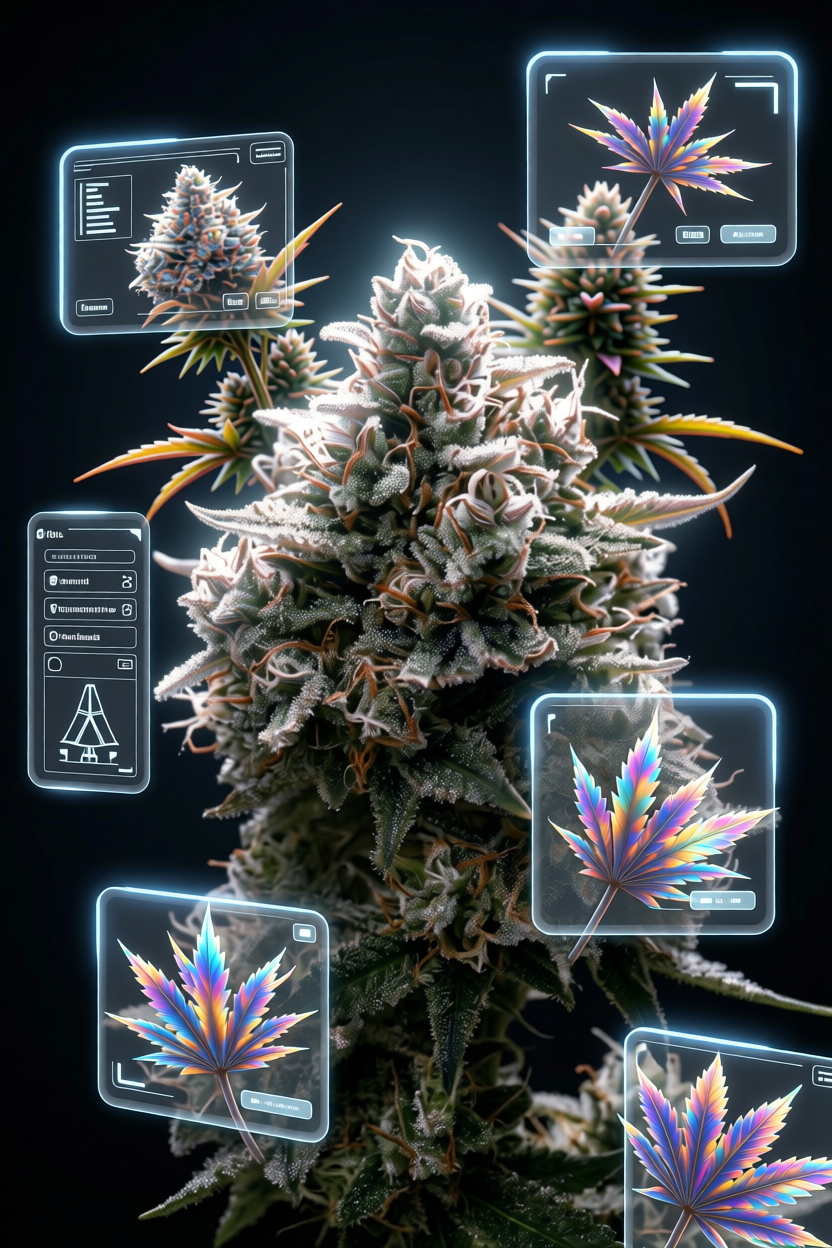
Understanding the Cannabis Cola: Structure, Development, and Significance
In the intricate world of cannabis cultivation, few terms are as central to understanding the plant’s reproductive structure and ultimate yield as “cola.” Far from a mere slang term, a cola represents the primary expression of the cannabis plant’s flowering effort: a dense, resinous cluster of buds. This article will delve into the precise definition, anatomical components, developmental processes, and cultivation techniques associated with the cannabis cola, offering an expert-level perspective on this crucial botanical feature.
What is a Cannabis Cola?
At its core, a cola in cannabis refers to a cluster of buds growing closely together, typically forming around a central stem or branch. While individual buds (more accurately, calyxes and bracts) are the fundamental units of the flowering structure, they aggregate to form these larger, more substantial colas.
The most prominent example is the main terminal bud, which develops into the largest and often most impressive cola at the apex of the plant’s central stalk. However, colas also form on the lateral branches, often referred to as side colas or auxiliary colas. These structures are the primary target for cultivators, as they represent the bulk of the harvestable cannabis flower, rich in cannabinoids and terpenes. Understanding the formation and development of these clusters is paramount for anyone involved in growing marijuana or weed.
The Anatomy of a Cola
While a cola appears as a singular, cohesive unit, it is, in fact, a complex aggregation of several distinct botanical components.
Individual Buds (Calyxes and Bracts)
Within a cola, the smallest, most fundamental units are the individual buds, which are technically the calyxes and bracts.
- Calyxes: These are the tear-drop or pear-shaped structures that encase the ovule, often mistaken for seeds if not pollinated. They are typically the most resinous part of the flower and swell as the plant matures.
- Bracts: Small, modified leaves that subtend the calyxes and other floral structures.
- Pistils (Hairs): The hair-like stigmas that emerge from the calyxes, designed to catch pollen. Their color changes from white to orange, red, or brown as the plant matures, serving as a visual indicator of ripeness.
- Trichomes: Microscopic, mushroom-shaped glands that cover the surface of the calyxes, bracts, and sugar leaves. These are the factories for cannabinoids (like THC and CBD) and terpenes, giving cannabis its potency and aroma. A dense cluster of trichomes is a hallmark of a high-quality cola.
The Central Stem/Stalk
Each cola forms around a segment of the plant’s stem or a lateral branch. This central axis provides the structural support for the numerous individual buds that develop closely together, allowing them to stack and form the characteristic elongated or rounded shape of a cola. The density and integrity of this central stalk are crucial for supporting the weight of a mature, resin-heavy cola.
Sugar Leaves
Interspersed within the dense cluster of buds are small, often heavily trichome-laden leaves known as “sugar leaves.” These are distinct from the larger fan leaves and are typically trimmed during the post-harvest process (manicuring). Despite their small size, their high trichome count makes them valuable for extracts and edibles. Their presence within the cola helps protect the delicate floral structures and contributes to the overall biomass.
Development and Formation of Colas
The journey from a vegetative plant to one adorned with impressive colas is a fascinating process driven by genetics, environmental cues, and hormonal changes.
Vegetative Stage Foundation
Before flowering can even begin, the plant establishes its structural framework during the vegetative stage. This involves developing a robust root system, a strong main stem, and numerous lateral branches. The more nodes and branches a plant develops, the greater its potential to produce multiple bud sites that will eventually form colas. Proper nutrition and light during this stage are critical for building a sturdy foundation.
Transition to Flowering
The shift from vegetative growth to flowering is primarily triggered by a change in the light cycle for photoperiodic cannabis varieties (typically 12 hours of light, 12 hours of darkness). This environmental cue initiates a cascade of hormonal changes within the plant, redirecting its energy from foliage production to reproductive development. The first visible signs are often the emergence of tiny white pistils at the nodes, indicating the formation of pre-flowers.
Bud Site Development and Clustering
Once flowering is initiated, individual bud sites begin to form at each node along the main stem and lateral branches. Initially, these are small and distinct. However, as the flowering phase progresses, these individual buds begin to swell and proliferate, growing closely together and stacking on top of each other. This continuous aggregation and expansion of floral material is what ultimately forms the dense, elongated cluster we recognize as a cola. The main terminal bud at the very top of the plant, due to its prime position and apical dominance, typically develops into the largest and most prominent cola.
The Role of Light and Genetics
Light intensity and spectrum are paramount for robust cola development. Plants receiving ample, high-quality light will produce larger, denser, and more resinous colas. Genetics also play a significant role; some strains are naturally predisposed to producing one massive main terminal cola (often referred to as an “indica” growth pattern), while others develop numerous smaller, but equally potent, side colas (more common in “sativa” dominant varieties). Understanding a strain’s genetic tendencies helps cultivators optimize their training strategies.
Types of Colas and Their Significance
Not all colas are created equal, and understanding their different types is crucial for maximizing yield and quality when growing cannabis.
The Main Terminal Cola
This is the undisputed king of the colas. Located at the very apex of the plant’s central stem, the main terminal cola benefits from direct, unobstructed light exposure and the plant’s natural apical dominance, which directs the majority of growth hormones and energy to this point. Consequently, it is almost always the largest, densest, and most developed cluster of buds on the entire plant. Cultivators often employ techniques like “topping” or “FIMming” to disrupt this apical dominance and encourage the development of multiple main colas, thereby increasing overall yield.
Side Colas (Auxiliary Colas)
Forming on the lateral branches that extend from the main stem, side colas are significant contributors to the plant’s total yield. While typically smaller than the main terminal cola, a well-trained plant can produce numerous substantial side colas that collectively outweigh a single main cola. Their development is heavily influenced by light penetration and airflow. Techniques like Low-Stress Training (LST) are used to spread out the canopy, allowing light to reach these lower bud sites and encouraging them to develop into robust clusters.
Popcorn Buds
“Popcorn buds” are smaller, less dense buds that often form lower down on the plant or in areas that receive insufficient light. While still part of the overall bud cluster concept, they are less developed and typically less potent than their larger counterparts. Many cultivators choose to remove these lower buds and small clusters during the flowering stage through a technique called “lollipopping,” redirecting the plant’s energy towards the more productive upper colas.
Cultivation Techniques Influencing Cola Development
Expert cultivators employ various techniques to manipulate plant growth and optimize cola development, ensuring a bountiful harvest of high-quality weed.
Topping and FIMming
These high-stress training (HST) techniques involve removing or damaging the main terminal bud during the vegetative stage.
- Topping: Involves cleanly cutting off the very top of the main stem, removing the main terminal bud. This eliminates apical dominance, causing the two branches directly below the cut to become new main stems, each capable of developing a large cola.
- FIMming (Fuck I Missed): A less precise technique where only a portion of the main terminal bud is removed or damaged. This can result in 3-5 new main stems and colas, though often less uniformly.
Both methods encourage the plant to produce multiple large clusters of buds rather than a single dominant one.
Low-Stress Training (LST)
LST involves gently bending and tying down branches to create a more even canopy. This allows light to penetrate deeper into the plant, reaching more bud sites and encouraging the development of multiple, uniformly sized side colas. By spreading out the branches, LST helps to maximize the number of clusters of buds that receive optimal light, leading to a more balanced and higher overall yield.
Lollipopping
This technique involves removing the lower branches and bud sites that receive insufficient light and are unlikely to develop into significant colas. By “lollipopping” the plant (removing growth from the bottom third to half), cultivators direct the plant’s energy and resources towards the upper, light-exposed colas, resulting in larger, denser clusters at the top. This focuses the plant’s effort on the most productive terminal and upper buds.
Environmental Factors
Beyond training, environmental control is critical for healthy cola development:
- Light Intensity and Spectrum: High-intensity full-spectrum lighting is crucial during flowering for dense, resinous colas.
- Temperature and Humidity: Optimal ranges prevent stress, mold, and mildew, which can devastate dense clusters of buds. Good airflow is especially important within and around colas to prevent moisture buildup.
- Nutrient Availability: Proper feeding, particularly with phosphorus and potassium during flowering, supports robust bud and cola development.
- Airflow: Adequate air circulation around and through the dense colas is essential to prevent mold and mildew, especially as the buds grow closely together and become more compact.
The Importance of Colas in Cannabis Cultivation
The cola is not just a botanical curiosity; it is the central focus of cannabis cultivation, representing the culmination of the plant’s growth cycle and the desired product.
Primary Yield Component
For the cultivator, colas represent the vast majority of the harvestable flower. The size, density, and number of colas directly correlate with the overall yield of marijuana from a single plant. Maximizing cola development is therefore a primary objective for commercial and home growers alike.
Quality Indicator
Well-formed, dense, and resinous colas are a strong indicator of a healthy, well-grown plant. The visual appeal, aroma, and trichome coverage of a cola are key metrics used to assess the quality and potency of the weed. A robust cluster of buds signifies successful cultivation practices.
Harvesting Considerations
The maturity of the colas dictates the optimal harvest time. Cultivators meticulously observe the pistils (hairs) and, more importantly, the trichomes on the buds within the cluster to determine when the cannabinoids and terpenes have reached their peak. Harvesting at the right moment ensures maximum potency and desired effects from the flowering plant. Post-harvest, the careful drying and curing of these colas are essential steps to preserve their quality, aroma, and flavor.
Conclusion
The cola, defined as a cluster of buds growing closely together, particularly the main terminal bud, is the quintessential feature of the flowering cannabis plant. From its intricate anatomy of individual calyxes and trichomes to its development influenced by genetics and environment, understanding the cola is fundamental to successful marijuana cultivation. By mastering techniques that encourage robust cola formation, cultivators can ensure a bountiful harvest of high-quality weed, showcasing the plant’s full genetic potential. The cola stands as a testament to the plant’s reproductive prowess and the cultivator’s skill in nurturing its growth.