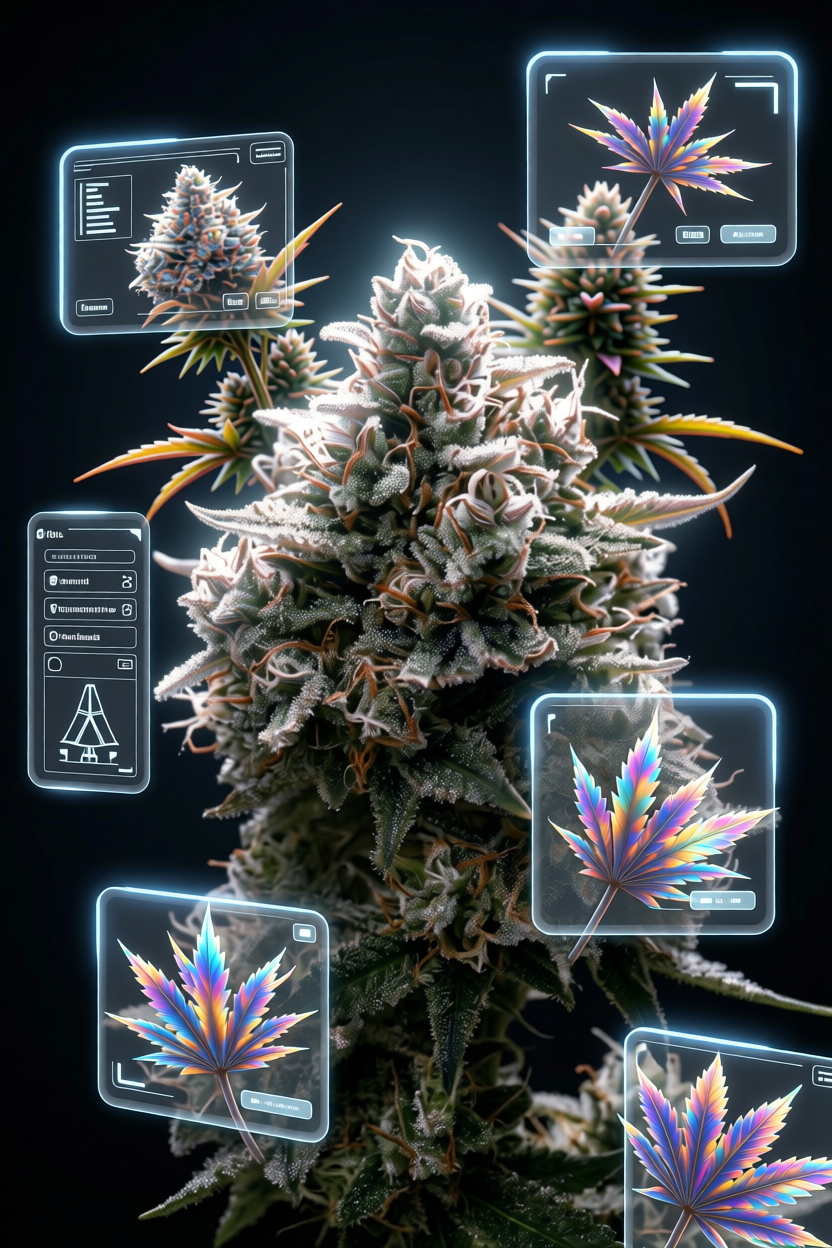
Pre-flower: Deciphering the First Signs of Sex at the Nodes
For anyone cultivating Cannabis sativa L., understanding the plant’s life cycle is paramount to a successful harvest. A critical juncture in this journey is the “pre-flower” stage – the initial, subtle indicators that reveal a plant’s sex before it commits fully to the reproductive phase. This period, often overlooked by novices, provides invaluable information, allowing growers to make informed decisions that directly impact yield and quality.
This article will delve into the intricacies of pre-flower development, explaining what to look for, where to find it, and why its early identification is crucial for optimizing your cannabis cultivation efforts.
The Cannabis Life Cycle: A Brief Overview
Cannabis plants typically progress through distinct life stages: germination, seedling, vegetative, and flowering. The transition from the vegetative phase, characterized by robust leaf and stem growth, to the flowering phase, where the plant focuses on producing buds, is primarily dictated by photoperiod (the duration of light and darkness) for most strains.
During the vegetative stage, cannabis plants maintain an 18-hour light / 6-hour dark cycle (or even 24 hours of light) to maximize growth. However, even under these conditions, mature plants will often begin to display “pre-flowers” – the first signs of their sexual identity – at the nodes. This phenomenon is a natural part of the plant’s maturation process, signaling its readiness to transition into full flowering once the light cycle is adjusted.
What is Pre-flower?
Pre-flower refers to the rudimentary reproductive structures that appear at the nodes of a cannabis plant. These are not fully developed flowers or buds, but rather small, nascent formations that clearly indicate whether a plant is male, female, or hermaphroditic. Identifying these early markers is essential for growers, particularly those cultivating photoperiod strains from regular seeds, as it allows for the timely removal of male plants.
The appearance of pre-flowers typically occurs when a plant reaches a certain level of maturity, usually between 3 to 6 weeks into the vegetative stage, or shortly after the light cycle is switched to 12 hours of light and 12 hours of darkness to induce flowering. This early revelation of sex is a biological advantage for the plant, preparing it for reproduction, and a practical advantage for the grower, enabling efficient resource management.
Identifying Pre-flower: Key Indicators at the Nodes
The primary location to inspect for pre-flowers is at the nodes – the points where branches emerge from the main stem. A magnifying glass or jeweler’s loupe can be incredibly helpful for discerning these small structures.
Stipules: Often Confused, But Not Sex Indicators
Before delving into the definitive sex indicators, it’s important to clarify the role of stipules. Stipules are small, leaf-like appendages that grow in pairs at the base of the petiole (leaf stem) where it joins the main stem or branch. They are present on both male and female cannabis plants and are not indicators of sex themselves. While they can sometimes be mistaken for early pre-flowers due to their location, they lack the distinct characteristics of male pollen sacs or female pistils. Stipules are simply a part of the leaf anatomy and are present throughout the vegetative stage.
Female Pre-flowers: The Promise of Pistils
The most sought-after signs of a female plant are its pre-flowers. These appear as small, teardrop-shaped or slightly elongated structures, often resembling a tiny, immature calyx. Crucially, from the tip of this structure, one or two delicate, white or translucent hair-like strands will emerge. These hairs are the pistils (or stigmas), and their presence is the definitive indicator of a female marijuana plant.
- Appearance: Small, bulbous or teardrop-shaped structure with one or two fine, white hairs protruding.
- Location: At the nodes, typically in the axil where a branch meets the main stem.
- Significance: Confirms the plant is female, capable of producing cannabinoid-rich flower when pollinated, or seedless sinsemilla when unpollinated.
Male Pre-flowers: The Threat of Pollen Sacs
Identifying male pre-flowers early is critical for preventing unwanted pollination, which can significantly reduce the quality and potency of female buds by causing them to produce seeds. Male pre-flowers appear distinctly different from their female counterparts. They are small, smooth, spherical structures, often described as resembling tiny balls, grapes, or miniature bananas. They do not have any hairs (pistils) emerging from them.
- Appearance: Small, smooth, round, or slightly oval sacs. No hairs.
- Location: At the nodes, similar to female pre-flowers.
- Significance: Confirms the plant is male, producing pollen. These plants should be removed from the grow space immediately unless breeding is the objective.
Hermaphroditic Pre-flowers: A Mixed Signal
In some cases, a cannabis plant may develop both male and female reproductive structures on the same individual. This condition is known as hermaphroditism. Hermaphroditic plants can arise due to genetic predisposition or environmental stress (e.g., light leaks during darkness, extreme temperatures, nutrient deficiencies).
- Appearance: A mix of both male (spherical sacs) and female (calyx with pistils) pre-flowers on the same plant.
- Location: Can appear at various nodes throughout the plant.
- Significance: Hermaphroditic plants can self-pollinate or pollinate other females, leading to seeded weed. They are generally removed unless a specific breeding strategy is in place.
Timing and Factors Influencing Pre-flower Appearance
The timing of pre-flower development can vary based on several factors:
- Genetics: Some strains, particularly certain Sativas, may show pre-flowers later than Indicas. Autoflowering strains, by nature, will transition to flowering regardless of the light cycle and will display pre-flowers as they mature, typically around 3-4 weeks from germination.
- Plant Maturity: Younger, immature plants are less likely to show pre-flowers. As the plant ages and develops more nodes, the likelihood of seeing these first signs increases.
- Light Cycle: While pre-flowers can appear during an extended vegetative period (e.g., 18/6 or 24/0 light cycle), they become much more pronounced and numerous shortly after the light cycle is flipped to 12/12 to induce full flowering. This change in photoperiod signals to the plant that it’s time to reproduce.
- Stress: While stress can sometimes induce early pre-flower development, it can also contribute to hermaphroditism, especially in genetically susceptible plants.
The Importance of Early Sexing
Identifying the sex of your cannabis plants early in their life cycle is not merely an academic exercise; it is a fundamental practice for efficient and successful cultivation.
- Resource Allocation: Male plants consume valuable resources – light, water, nutrients, and space – that could otherwise be dedicated to female plants. Removing males early ensures that all resources are directed towards producing high-quality, cannabinoid-rich flower.
- Preventing Pollination: For growers aiming to produce sinsemilla (seedless marijuana), the timely removal of male plants is paramount. Pollination causes female plants to divert energy from cannabinoid and terpene production towards seed development, drastically reducing the potency, flavor, and overall market value of the harvest.
- Optimizing Grow Space: Early sexing allows growers to optimize their grow space. If a significant number of plants turn out to be male, the remaining female plants can be spaced out more effectively, allowing for better light penetration and air circulation, which promotes healthier growth and larger yields.
- Early Detection of Issues: Identifying hermaphroditic plants early prevents them from potentially pollinating an entire crop, saving weeks or months of effort.
Distinguishing Pre-flower from True Flowers
It’s important to differentiate between pre-flowers and the true flowers (buds) that develop during the main flowering phase.
- Pre-flowers: These are isolated, small structures found specifically at the nodes. They are the initial indicators of sex.
- True Flowers: These develop into dense clusters, forming colas along the main stem and branches. They are much larger, more numerous, and complex, comprising many calyxes, pistils, and eventually trichomes. Pre-flowers are essentially the precursors to these larger, more complex structures.
Conclusion
The pre-flower stage is a pivotal moment in the life of a cannabis plant, offering the first clear signs of its sexual identity. By diligently inspecting the nodes for the presence of pistils (indicating a female) or pollen sacs (indicating a male), growers can make timely decisions that profoundly impact the efficiency and success of their cultivation efforts. Mastering the identification of these subtle yet significant markers is a hallmark of an experienced grower, ensuring that resources are optimized, pollination is prevented, and the path is cleared for a bountiful harvest of high-quality cannabis flower.