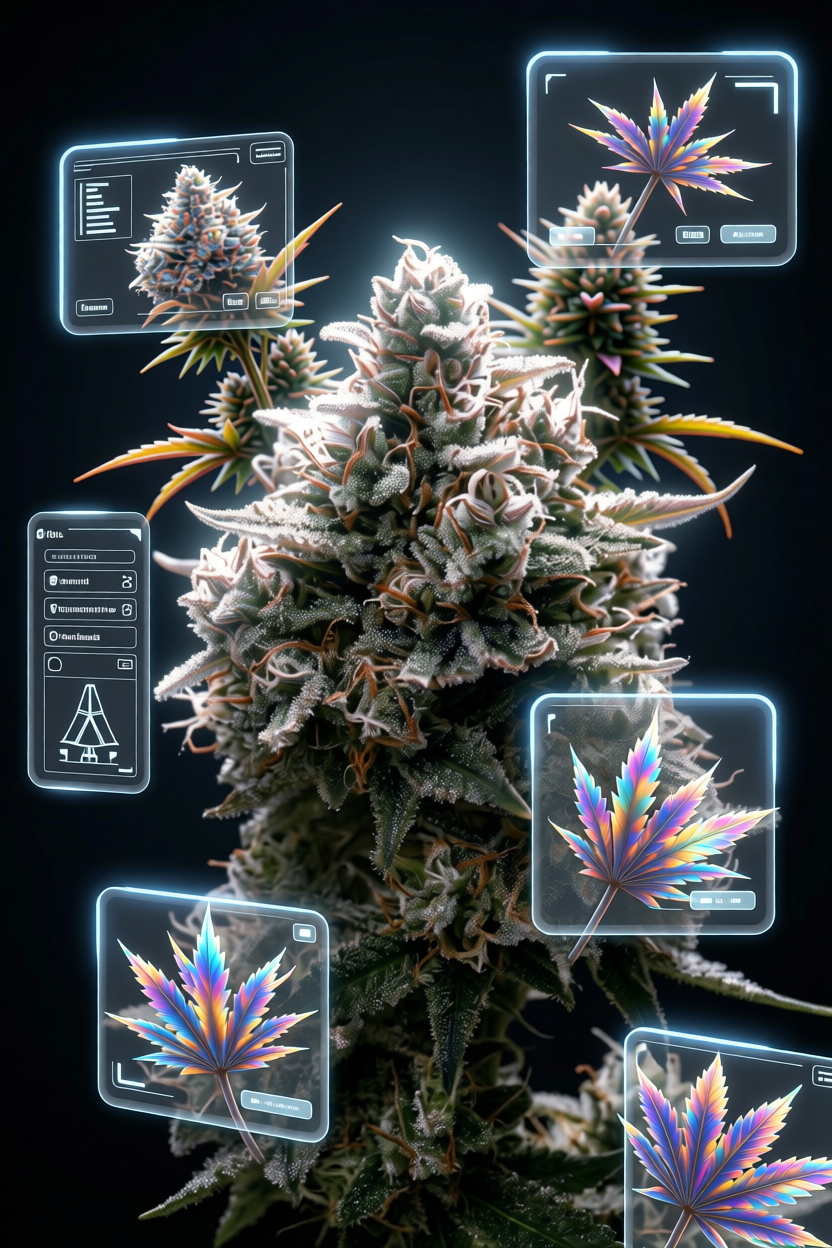
Decarboxylation: Using Heat to Convert THCA into Active THC
The world of cannabis is rich with complex chemistry, and at its heart lies a fundamental process that unlocks the plant’s most sought-after effects: decarboxylation. Often overlooked by casual consumers, this chemical transformation is absolutely essential for converting the raw, non-intoxicating compounds found in the cannabis plant into the active, potent cannabinoids that interact with the human body. This article will delve deeply into the science of decarboxylation, specifically focusing on using heat to convert THCA into active THC, providing an expert-level understanding of this critical process.
Introduction to Decarboxylation in Cannabis
Raw cannabis, whether referred to as weed or marijuana, does not naturally contain significant amounts ofound of the psychoactive compound delta-9-tetrahydrocannabinol (THC). Instead, it primarily contains its acidic precursor, tetrahydrocannabinolic acid (THCA). THCA, while possessing its own potential therapeutic properties, is non-intoxicating. For cannabis to exert its characteristic psychoactive effects, this THCA must undergo a chemical reaction known as decarboxylation.
Decarboxylation is, in essence, the removal of a carboxyl group (COOH) from a molecule. In the context of cannabis chemistry, this process is predominantly triggered by heat. When cannabis is exposed to sufficient heat, the THCA molecule sheds its carboxyl group, transforming into the active and intoxicating THC. Understanding this conversion is paramount for anyone looking to effectively utilize the full potential of the cannabis plant.
The Chemistry Behind Decarboxylation
To truly grasp decarboxylation, one must first appreciate the molecular structures involved and the specific chemical reaction that takes place.
Understanding Cannabinoid Precursors: THCA
Cannabinoids in their raw, natural state within the living cannabis plant exist primarily in their acidic forms. THCA (Tetrahydrocannabinolic Acid) is the most abundant cannabinoid in most strains of raw marijuana cultivated for its psychoactive potential. The key structural feature that distinguishes THCA from THC is the presence of a carboxylic acid group (COOH) attached to the cannabinoid molecule.
This carboxylic acid group is responsible for THCA’s non-psychoactive nature. Its presence prevents THCA from effectively binding to the CB1 receptors in the endocannabinoid system, which are primarily responsible for mediating the intoxicating effects of THC. Therefore, while raw weed contains a wealth of THCA, consuming it without decarboxylation will not produce the “high” typically associated with cannabis.
The Decarboxylation Reaction
The decarboxylation reaction is a relatively straightforward chemical process. When THCA is subjected to heat, the energy causes the carboxylic acid group to detach from the molecule. This group is released as carbon dioxide (CO2) and water vapor. What remains is the neutral, non-acidic form: delta-9-THC.
The general chemical equation can be represented as:
THCA + Heat → THC + CO2
This transformation is irreversible under normal conditions. The application of heat acts as the catalyst, providing the activation energy necessary for the chemical bond holding the carboxyl group to break. This fundamental principle of chemistry is not unique to cannabis; many organic compounds undergo decarboxylation under specific conditions. For cannabis, however, it is the critical step that converts a dormant precursor into an active compound.
It’s important to note that THCA isn’t the only cannabinoid acid that undergoes this transformation. Cannabidiolic acid (CBDA) decarboxylates into cannabidiol (CBD), and cannabigerolic acid (CBGA) decarboxylates into cannabigerol (CBG), among others. The principle remains the same: using heat to convert the acidic form into its neutral, active counterpart.
Why Decarboxylation is Crucial for Cannabis Consumption
The primary reason for decarboxylating cannabis is to unlock its psychoactive potential. Without this process, the vast majority of THCA remains unconverted, rendering the weed non-intoxicating.
- Psychoactive Effects: As established, only active THC can effectively bind to CB1 receptors in the brain and central nervous system, producing the euphoric and intoxicating effects commonly associated with marijuana. For consumers seeking these effects, decarboxylation is non-negotiable.
- Bioavailability and Absorption: Decarboxylation also enhances the bioavailability of THC, meaning the body can absorb and utilize it more efficiently. While some THCA might be absorbed, its interaction with the endocannabinoid system is significantly different from that of THC.
- Consumption Methods: Different methods of cannabis consumption inherently involve decarboxylation:
- Smoking/Vaporizing: When you smoke a joint or use a vaporizer, the intense heat instantly decarboxylates the THCA into active THC as it’s inhaled. This rapid conversion is why effects are felt almost immediately.
- Edibles/Tinctures: For products like edibles, tinctures, or topicals, the cannabis material must be decarboxylated before being infused into a fat or alcohol base. Without this pre-treatment, the final product would be largely ineffective in delivering active cannabinoids.
Practical Methods for Decarboxylating Cannabis
While smoking or vaporizing provides instantaneous decarboxylation, preparing cannabis for edibles, oils, or tinctures requires a controlled decarboxylation process. Here are the most common and effective methods using heat.
Oven Decarboxylation (The Most Common Method)
This is perhaps the most widely adopted method for home decarboxylation due to its simplicity and accessibility.
- Preparation: Finely grind your cannabis flower (or trim) to increase its surface area, ensuring more even heat distribution. Spread the ground material evenly on a baking sheet lined with parchment paper. This prevents sticking and makes cleanup easier.
- Temperature and Time: The general consensus for optimal oven decarboxylation is to bake the weed at a temperature between 220-245°F (105-120°C) for 30-45 minutes.
- Lower temperatures for longer durations (e.g., 220°F for 45-60 minutes) are often preferred to preserve terpenes and prevent the degradation of THC into CBN (cannabinol), which can occur at higher temperatures or extended times. CBN is mildly sedating but not psychoactive in the same way as THC.
- It’s crucial to monitor the material; it should look lightly toasted, not burnt.
- Cooling: Allow the decarboxylated cannabis to cool completely on the baking sheet before handling. This helps to preserve the converted cannabinoids.
Water Bath (Sous Vide) Decarboxylation
The sous vide method offers superior temperature control and can help preserve terpenes due to the sealed environment, which also contains odors.
- Preparation: Place your ground cannabis into a vacuum-sealable bag. Ensure it’s completely sealed, removing as much air as possible.
- Process: Submerge the sealed bag into a water bath heated to a precise temperature, typically 203-212°F (95-100°C).
- Time: Allow the cannabis to decarboxylate for 1-2 hours in the water bath. The longer duration at a lower, more controlled temperature ensures thorough conversion without significant degradation.
- Cooling: Remove the bag and allow it to cool before opening.
Decarboxylation During Smoking or Vaporization
As mentioned, these methods inherently decarboxylate THCA into active THC due to the intense heat applied.
- Smoking: When weed is ignited, temperatures can reach well over 1000°F (538°C). This extreme heat causes instantaneous decarboxylation, but also leads to the combustion of a significant portion of cannabinoids and terpenes, creating byproducts like tar and carcinogens.
- Vaporization: Vaporizers operate at much lower, controlled temperatures (typically 350-430°F or 175-220°C). This allows for efficient decarboxylation and vaporization of cannabinoids and terpenes without combustion, resulting in a cleaner, smoother experience and potentially higher cannabinoid delivery.
Other Methods
- Oil Infusion: Some methods combine decarboxylation with oil infusion, where cannabis is heated directly into a carrier oil (like coconut oil or butter) over a period. This simultaneously decarboxylates the THCA into active THC and extracts the cannabinoids into the fat.
- Specialized Decarboxylators: Several devices are available on the market specifically designed for decarboxylating cannabis with precise temperature and time controls, offering a convenient and often odor-contained solution.
Factors Influencing Decarboxylation Efficiency
Achieving optimal decarboxylation requires careful consideration of several variables.
Temperature and Time
This is the most critical factor. The relationship between temperature and time is inverse: higher temperatures require less time, and lower temperatures require more time.
- Too Low/Too Short: Incomplete decarboxylation, leaving a significant amount of THCA unconverted and reducing the potency of the final product.
- Too High/Too Long: While it will fully convert THCA into active THC, excessive heat can cause the THC itself to degrade into CBN (cannabinol). CBN is a mildly psychoactive cannabinoid known for its sedative properties, but its formation reduces the overall THC content and can alter the desired effects. It can also lead to the evaporation of volatile terpenes, impacting the aroma and flavor profile.
Material Consistency and Surface Area
Grinding the cannabis material before decarboxylation is crucial. A finer grind increases the surface area exposed to heat, allowing for more uniform and efficient decarboxylation. Large, dense buds will decarboxylate unevenly, with the exterior converting faster than the interior.
Moisture Content
Dry cannabis will decarboxylate more efficiently than wet or freshly harvested material. Excess moisture can act as a buffer, requiring more heat energy to evaporate the water before the decarboxylation reaction can proceed effectively. It can also lead to steaming rather than even toasting.
Strain Specificity
While the general principles apply, different cannabis strains may have slightly varying optimal decarboxylation profiles due to their unique cannabinoid and terpene compositions. Some strains might be more prone to terpene degradation at higher temperatures, suggesting a lower-and-slower approach.
Beyond THCA: Decarboxylation of Other Cannabinoids
It’s important to reiterate that the decarboxylation principle applies to all major cannabinoid acids found in cannabis.
- CBDA to CBD: Cannabidiolic acid (CBDA) is the precursor to cannabidiol (CBD). Like THCA, CBDA is non-intoxicating, and using heat is necessary to convert it into active CBD, which is widely recognized for its therapeutic potential.
- CBGA to CBG: Cannabigerolic acid (CBGA) is often referred to as the “mother cannabinoid” because it is the precursor from which other cannabinoids like THCA and CBDA are synthesized in the plant. CBGA also decarboxylates into CBG (cannabigerol), another non-intoxicating cannabinoid with emerging research interest.
Understanding this broader application reinforces the fundamental role of decarboxylation in unlocking the full spectrum of active cannabinoids from the raw cannabis plant.
Conclusion
Decarboxylation is a cornerstone of cannabis chemistry, a seemingly simple yet profoundly important process that transforms the raw plant material into its full potential. By using heat to convert THCA into active THC (and other cannabinoid acids into their neutral forms), we unlock the psychoactive and therapeutic properties that make cannabis so unique.
Whether through the instantaneous combustion of smoking, the controlled precision of vaporization, or the careful preparation for edibles, the underlying chemistry of decarboxylation remains constant. Mastering this process is not just about achieving a desired effect; it’s about understanding and respecting the intricate chemical transformations that govern the efficacy of weed and marijuana, allowing for informed and effective utilization of this complex plant.