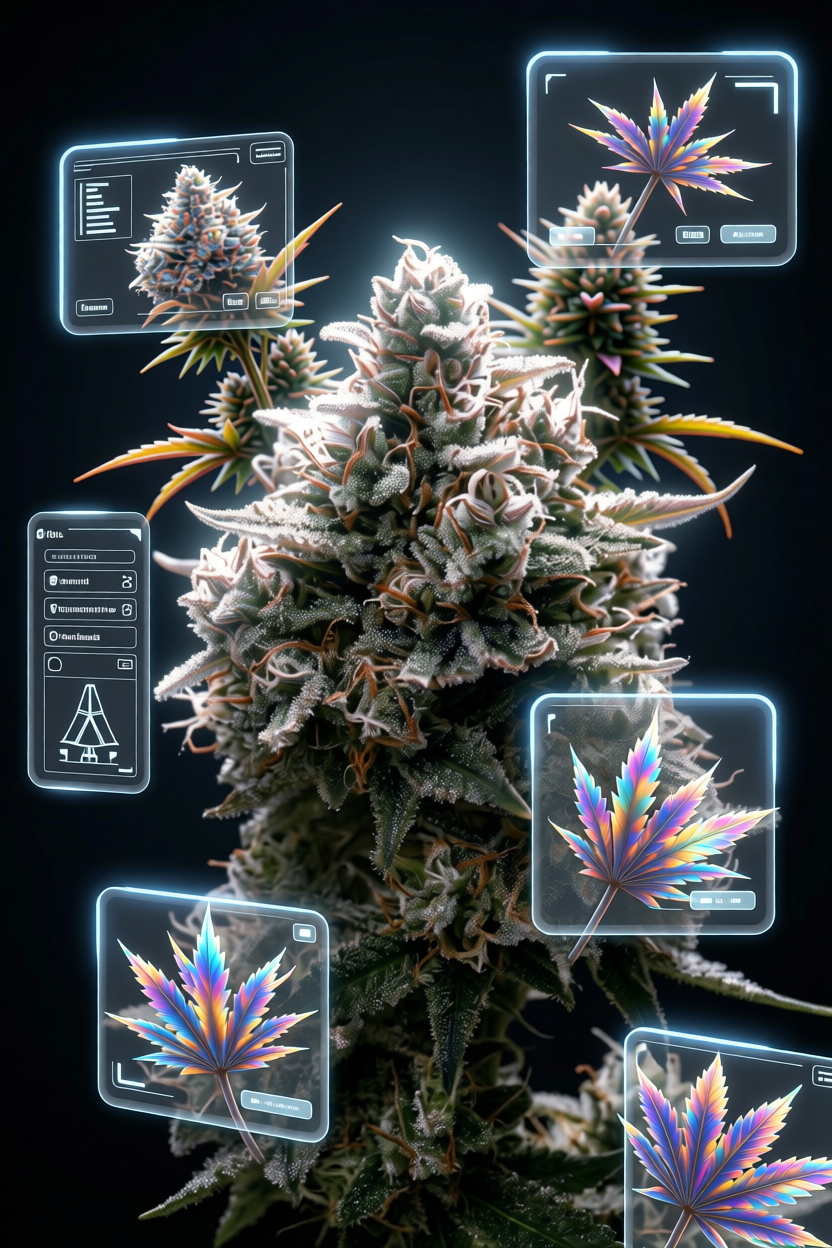
Metal Halide (MH) Lighting: The Traditional Blue-Spectrum Choice for Cannabis Vegetative Growth
For decades, indoor cannabis cultivators have relied on a diverse array of lighting technologies to nurture their plants from seed to harvest. Among these, Metal Halide (MH) lights have held a prominent and traditional position, specifically revered for their ability to provide the ideal light spectrum for the vegetative growth phase. This article delves into the science, application, and enduring legacy of MH lighting, establishing its critical role in the successful cultivation of robust cannabis plants.
Introduction to Metal Halide (MH) Lighting
Metal Halide (MH) lamps are a type of high-intensity discharge (HID) light, a category that also includes High-Pressure Sodium (HPS) lights. Historically, MH lights became a cornerstone for indoor growers due to their powerful output and, crucially, their distinct spectral distribution. Unlike HPS lights, which emit a predominantly red/orange spectrum, MH lamps are characterized by their strong emission in the blue spectrum. This specific spectral output makes them exceptionally well-suited for promoting vigorous, compact, and healthy vegetative growth in plants, particularly for demanding species like cannabis.
The adoption of MH lights marked a significant advancement for indoor marijuana cultivation, offering a level of intensity and spectral quality far superior to earlier fluorescent or incandescent options. They quickly became a standard tool in the grower’s arsenal, specifically for the initial growth stages before the plants transition to flowering.
Understanding the Light Spectrum: Why Blue Matters for Vegetative Growth
To appreciate the value of MH lights, it’s essential to understand the role of different light wavelengths in plant physiology. Plants utilize specific portions of the electromagnetic spectrum for photosynthesis and photomorphogenesis (light-regulated development).
The visible light spectrum ranges from approximately 400 nanometers (nm) to 700 nm. Within this range, chlorophyll, the primary pigment for photosynthesis, efficiently absorbs light in two main peaks: a strong peak in the blue region (around 430-470 nm) and another strong peak in the red region (around 640-670 nm).
The Significance of Blue Light (400-500 nm):
- Chlorophyll Absorption: Blue light is highly efficient for chlorophyll absorption, driving robust photosynthesis.
- Photomorphogenesis: Beyond energy production, blue light plays a crucial role in plant structure and development. It signals to the plant to grow compactly, with shorter internodal spacing and thicker stems. This is vital for preventing “stretching,” where plants become tall and lanky in search of light, often resulting in weaker structures that struggle to support heavy yields later on.
- Leaf Development: Blue light promotes the development of broad, healthy leaves, maximizing the plant’s surface area for light absorption.
- Stomatal Opening: It also influences stomatal opening, which is critical for gas exchange (CO2 intake) and transpiration.
For the vegetative phase of cannabis, the goal is to build a strong, bushy plant with a solid foundation. The blue spectrum provided by MH lamps directly supports this objective, preparing the plant for the demanding flowering stage. Without adequate blue light, weed plants can become leggy and less resilient, impacting overall yield and quality.
The Mechanics of Metal Halide Lamps
Metal Halide lamps are a type of high-intensity discharge (HID) lamp. Their operation involves passing an electric arc through a gaseous mixture containing mercury and various metal halides (compounds of metals with halogen elements like iodine or bromine).
Key Components:
- Arc Tube: A quartz or ceramic tube containing the gas mixture and electrodes. When electricity is applied, it creates an arc, heating the gases and causing the metal halides to vaporize.
- Outer Bulb: An outer glass envelope that protects the arc tube and filters UV radiation.
- Ballast: A critical external component that regulates the electrical current to the lamp. MH lamps require a specific voltage to ignite and a controlled current to operate stably. Ballasts can be magnetic (traditional, heavier) or electronic/digital (more efficient, lighter, often dimmable).
- Reflector/Hood: Designed to direct and distribute the light emitted by the lamp evenly over the plant canopy, maximizing light penetration and minimizing waste.
The specific blend of metal halides within the arc tube dictates the lamp’s spectral output. For traditional MH grow lights, this blend is carefully formulated to emphasize the blue spectrum, making them ideal for the vegetative phase.
Advantages of Using MH Lights for Cannabis Vegetative Phase
Despite the emergence of newer lighting technologies, MH lights continue to offer distinct advantages for the vegetative growth of cannabis:
- Optimal Blue Spectrum: As discussed, the strong blue spectrum output is perfectly tailored to promote compact, sturdy growth, preventing stretching and encouraging dense foliage. This is crucial for building a robust plant structure capable of supporting heavy flowers.
- High Intensity: MH lamps provide significant light intensity, which is essential for the rapid growth rates of cannabis during its vegetative stage. High Photosynthetic Photon Flux Density (PPFD) ensures plants receive ample energy for vigorous development.
- Good Canopy Penetration: While not as deep as HPS, MH lights offer good canopy penetration, ensuring that lower leaves and branches receive sufficient light, contributing to a more uniform and productive plant.
- Proven Reliability: MH technology is mature and well-understood. These lights have a long track record of success in indoor horticulture, making them a reliable choice for growers.
- Initial Cost-Effectiveness: Compared to some advanced LED systems, the initial investment in an MH setup (bulb, ballast, reflector) can be more budget-friendly, making them accessible to a wider range of growers.
Specific Benefits for Cannabis (Weed/Marijuana) Cultivation
For weed growers, the benefits translate directly into healthier, more productive plants:
- Robust Plant Structure: MH lights help develop strong stems and branches, which are vital for supporting the weight of dense buds during flowering.
- Reduced Stretching: By providing ample blue light, MH lamps minimize undesirable stretching, keeping plants manageable and maximizing light efficiency within the grow space.
- Preparation for Flowering: A well-developed vegetative plant under MH lighting is better prepared to transition into the flowering stage, leading to potentially higher yields and better quality marijuana.
Disadvantages and Considerations
While effective, MH lights do come with certain drawbacks that growers must consider:
- Heat Output: MH lamps generate a significant amount of heat. This necessitates robust ventilation and cooling systems to maintain optimal grow room temperatures, which can add to operational costs and complexity.
- Energy Efficiency: Compared to modern LED lights, MH lamps are less energy-efficient, converting a smaller percentage of electricity into usable light and a larger percentage into heat.
- Lifespan and Degradation: MH bulbs degrade over time, both in intensity and spectral quality. For optimal performance, they typically need to be replaced every 1-2 years (or 2-4 vegetative cycles), even if they still “work.”
- Ballast Requirement: The need for an external ballast adds to the equipment list and can be a point of failure.
- Spectrum Shift: MH lights are primarily designed for the vegetative phase. Their spectrum is not ideal for flowering, which typically requires a red-heavy spectrum (like HPS) to promote bud development. This often means growers need to switch bulbs or even entire fixtures for different growth stages.
Integrating MH Lights into a Grow Setup (Tools and Techniques)
Proper integration of MH tools and techniques is crucial for maximizing their benefits:
- Ballast Matching: Always ensure the ballast wattage matches the bulb wattage (e.g., a 600W MH bulb with a 600W ballast). Using mismatched components can damage the bulb or ballast and poses a fire risk.
- Reflector Choice: Choose a high-quality reflector that efficiently distributes light. Air-cooled reflectors are excellent for managing heat in smaller spaces.
- Ventilation and Cooling: Install adequate exhaust fans, intake fans, and potentially oscillating fans within the grow space to manage the heat generated by the lights. An air conditioner might be necessary in warmer climates.
- Light Cycle: For the vegetative phase of cannabis, an 18 hours on/6 hours off light cycle is common, though some growers opt for 20/4 or even 24/0.
- Distance to Canopy: Maintain an appropriate distance between the MH lamp and the plant canopy to prevent light burn while ensuring sufficient intensity. This distance varies with wattage (e.g., 400W: 18-24 inches; 600W: 20-30 inches; 1000W: 24-36 inches). Always monitor plants for signs of stress.
MH vs. Other Lighting Technologies (Brief Comparison)
Understanding where MH fits in the broader landscape of grow lighting is important:
- MH vs. HPS: These are often used in tandem. MH for vegetative growth (blue spectrum) and HPS for flowering (red/orange spectrum). Some growers use “dual spectrum” HPS bulbs that have a broader spectrum, but dedicated MH for veg and HPS for flower is the traditional approach.
- MH vs. LED: Modern LED grow lights offer full-spectrum capabilities, higher energy efficiency, and significantly lower heat output. However, their upfront cost is often higher, and the technology is still rapidly evolving. While LEDs are gaining dominance, MH still offers a proven, cost-effective solution for the vegetative stage.
- MH vs. Fluorescent (T5): T5 fluorescent lights are suitable for seedlings and clones due to their lower intensity and heat. However, for established cannabis plants in full vegetative growth, MH provides far superior intensity and canopy penetration, leading to more robust development.
The Evolving Landscape of Grow Lighting
While the grow lighting industry continues to innovate with advanced LED and Ceramic Metal Halide (CMH) technologies, the fundamental principles of plant photobiology remain constant. The need for a strong blue spectrum during vegetative growth is undeniable, and traditional MH lights have historically fulfilled this role with great success.
Many experienced growers still prefer MH for their vegetative rooms, appreciating their reliability and the specific growth patterns they induce. Understanding the specific needs of the plant at each stage and the characteristics of different lighting tools allows cultivators to make informed decisions, whether they choose to embrace cutting-edge technology or stick with proven, traditional methods.
Conclusion
Metal Halide (MH) lighting stands as a foundational and traditional technology in the world of indoor cannabis cultivation. Its distinct blue-spectrum output is perfectly calibrated to support the vegetative growth phase, promoting strong, compact, and healthy marijuana plants. While newer, more energy-efficient lights have emerged, the specific utility of MH lamps for building a robust plant structure remains highly valued.
By understanding the science behind the blue spectrum, the mechanics of metal halide lamps, and the practical considerations for their use, growers can effectively leverage this powerful tool to cultivate vigorous cannabis plants, laying the groundwork for bountiful harvests. The legacy of MH lights as the go-to choice for vegetative growth continues to influence cultivation practices, underscoring the importance of tailored lighting for optimal plant development.